
Sheffield woodland sensor installation
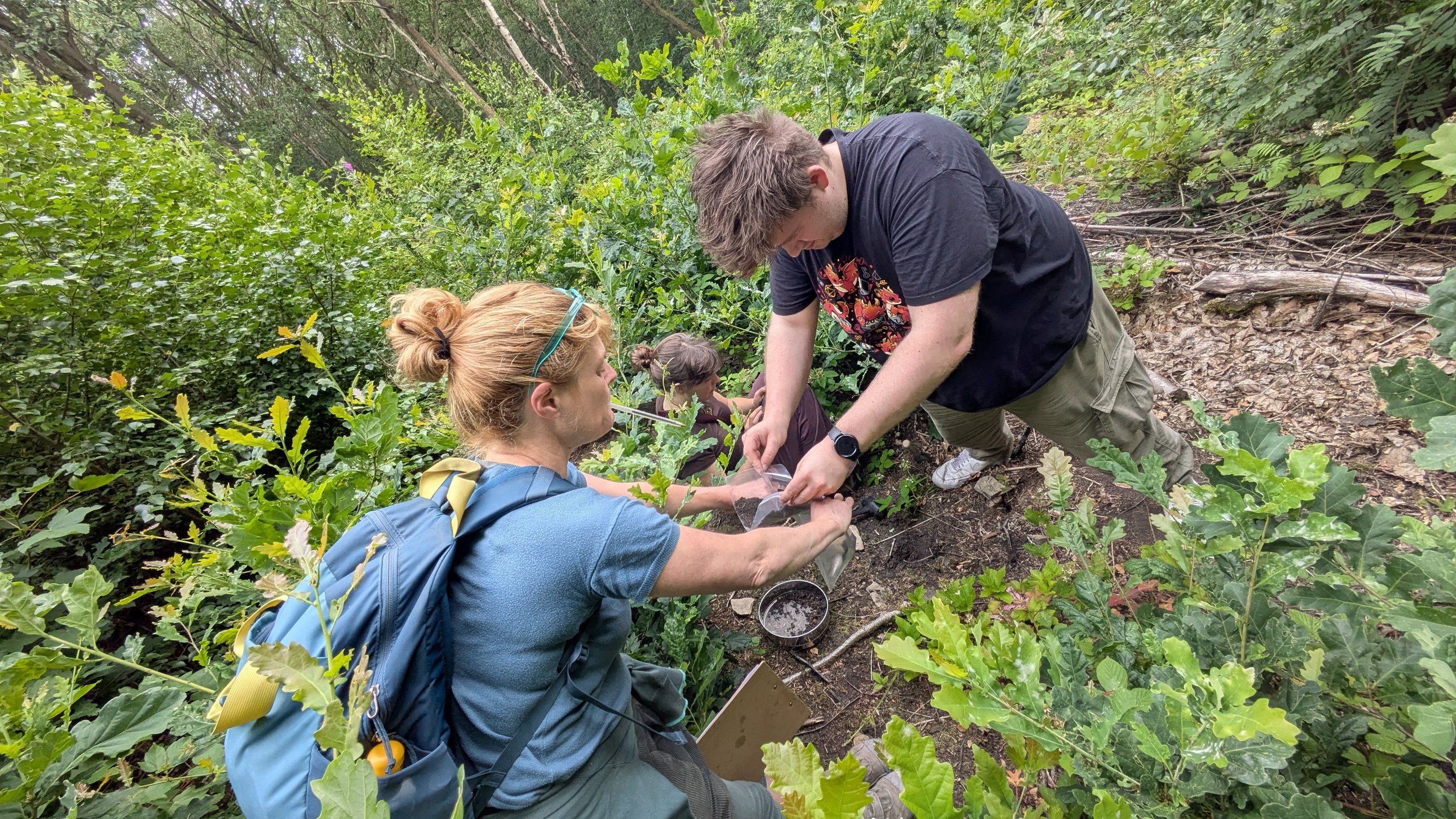
Sheffield is the greenest city in the UK, and during this visit it was easy to see why. Photo: Gareth Roberts.
Before the summer holidays, soon after Copenhagen and Tampere, the third fieldwork trip took place - this time with Erik van de Pol and Olivia van der Weiden visiting Sheffield in the UK to help set up the baseline monitoring for microclimate and soil health.
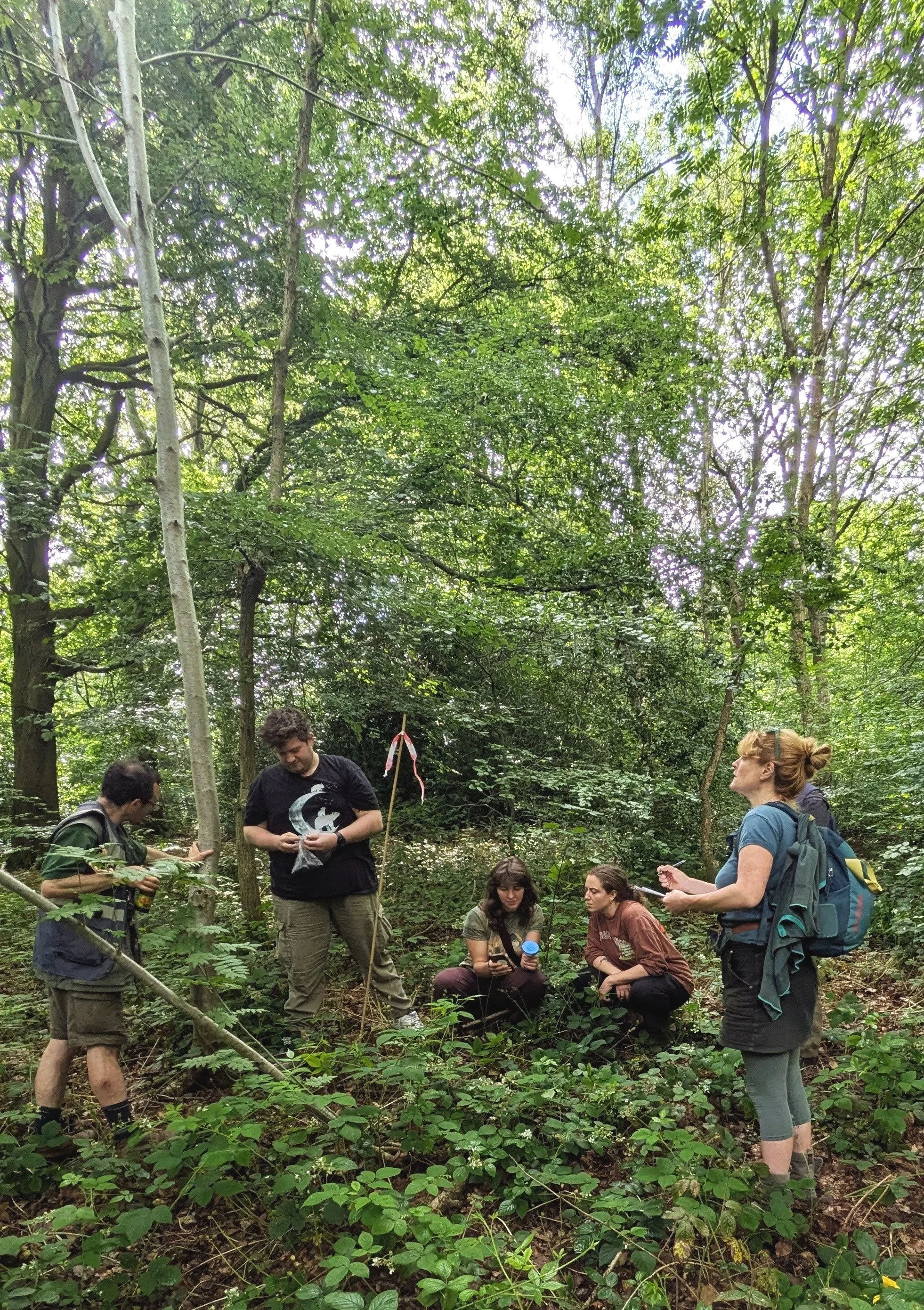
The participation of local volunteers is highly precious. Photo Gareth Roberts.
Together with the support of Gareth Roberts, local ecologists William F. and Fran Hall, and the local organisation Wildlife Trust Volunteers, we worked in Rollestone Wood in the Gleadless Valley. Sheffield is the greenest city in the UK, and during this visit it was easy to see why.
Within the woodland, several restoration measures are being implemented to improve ecological quality. In some areas, beech trees will be felled to support the recovery of degraded ground flora and stimulate natural tree regeneration, including oak. In another part of the woodland, coppice management (cutting trees near ground level) is being re-introduced on a steep slope where topsoil has been degraded by erosion and historical turf removal for charcoal production. Here, brash will also be laid in strips across the slope to help reduce erosion and support the gradual build-up of topsoil.
By monitoring microclimate and soil health across restoration sites and comparison areas of varying ecological quality, we can better understand how local conditions change after implementation and how different parts of the woodland perform in terms of the ecosystem services they provide.
During fieldwork, local ecologists explained how Sheffield’s industrial history has shaped the woodland, with historic air pollution leaving even 200-year-old trees surprisingly small. It forms a powerful example of how history, ecology and urban landscapes are closely connected.
A beautiful aspect of this demo case is the collaboration with local volunteers. The Wildlife Trust Volunteers showed a clear passion for nature and a strong connection to the woodland. They help maintain the area, remove litter, support practical conservation work, and were eager to learn more and contribute further to the monitoring.
This fieldwork was a reminder that successful restoration depends not only on ecological measurements, but also on local knowledge and the communities that care for these places over time.
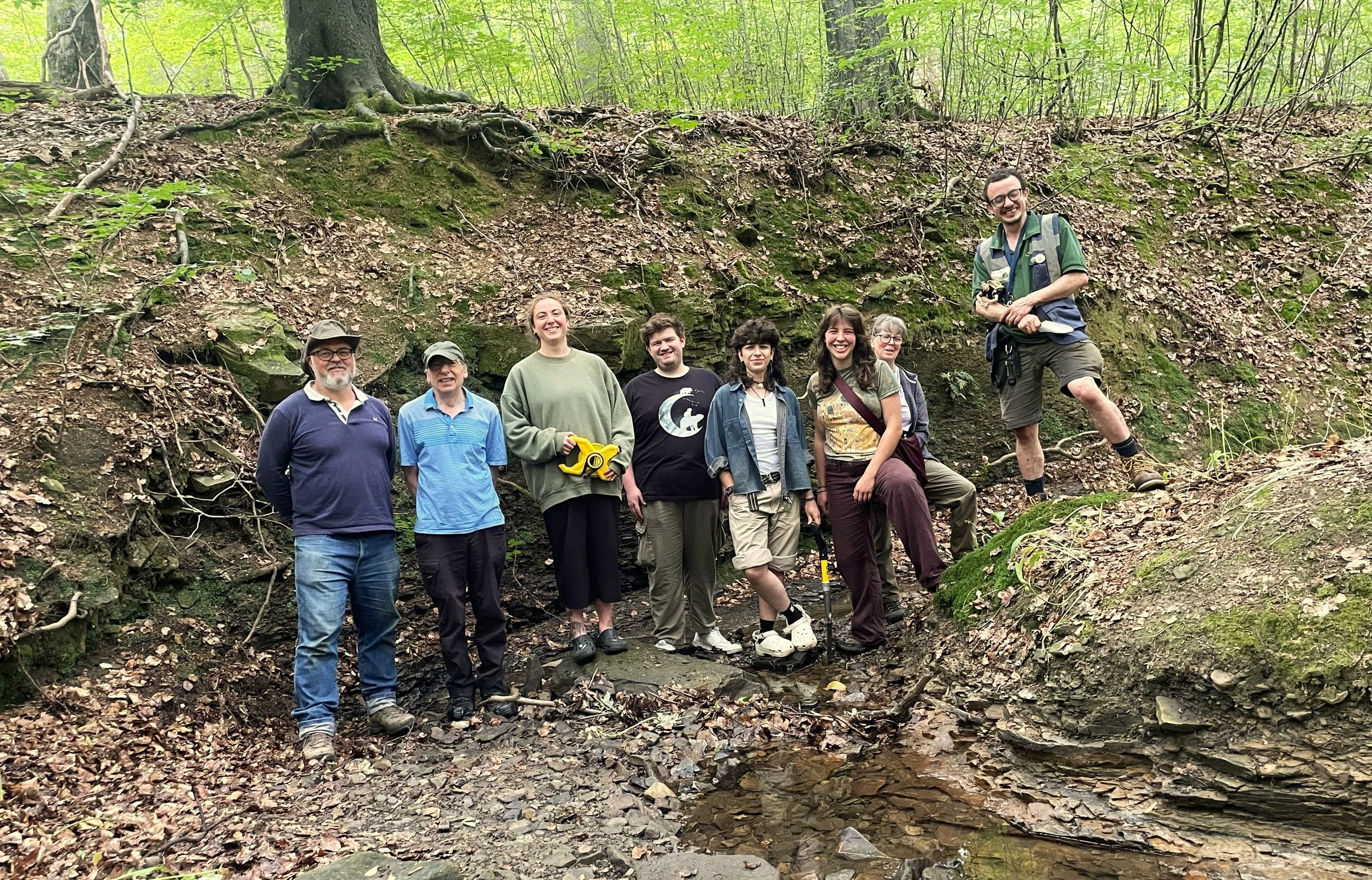
The team in Rollestone Wood in the Gleadless Valley. Local industrial history has shaped the woodland greatly. Photo Fran Halsall.
Author: Olivia van der Weiden
Project coordinator citizen science
Ecology & Biodiversity
Utrecht University