Setting the monitoring in Brezoi
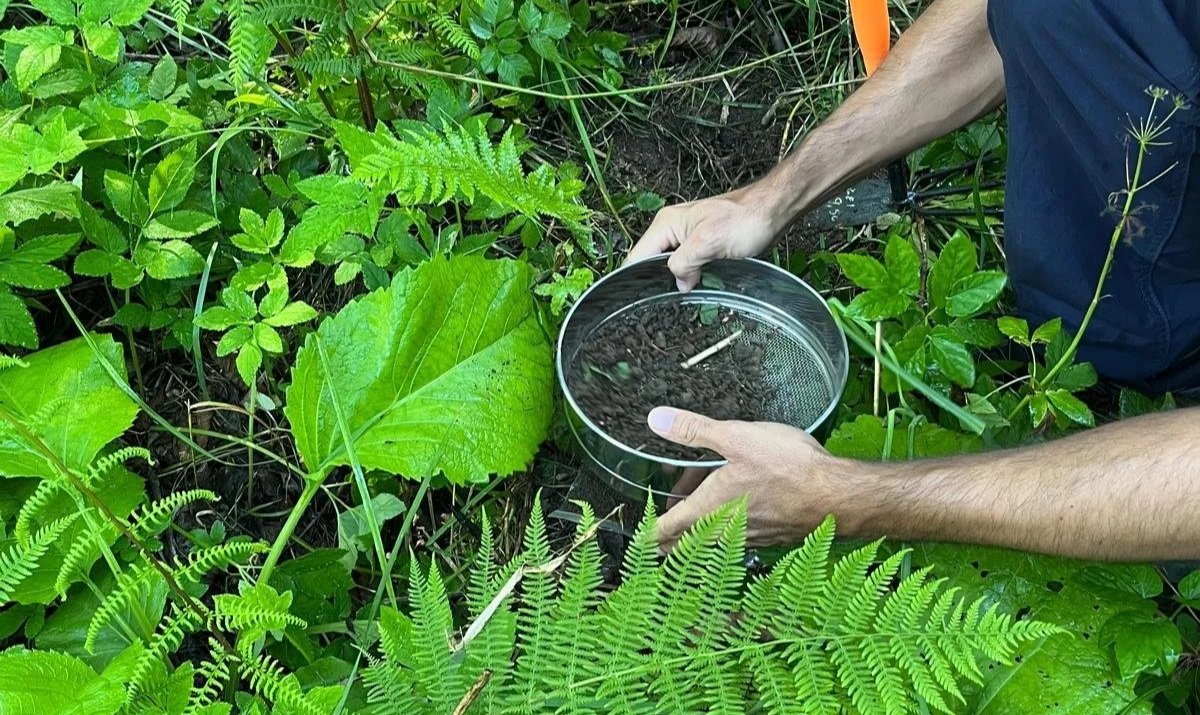
With soil samples the health of soil is monitored in Brezoi, similar to other INNATURE demo cases. Photo Doina Petrescu.
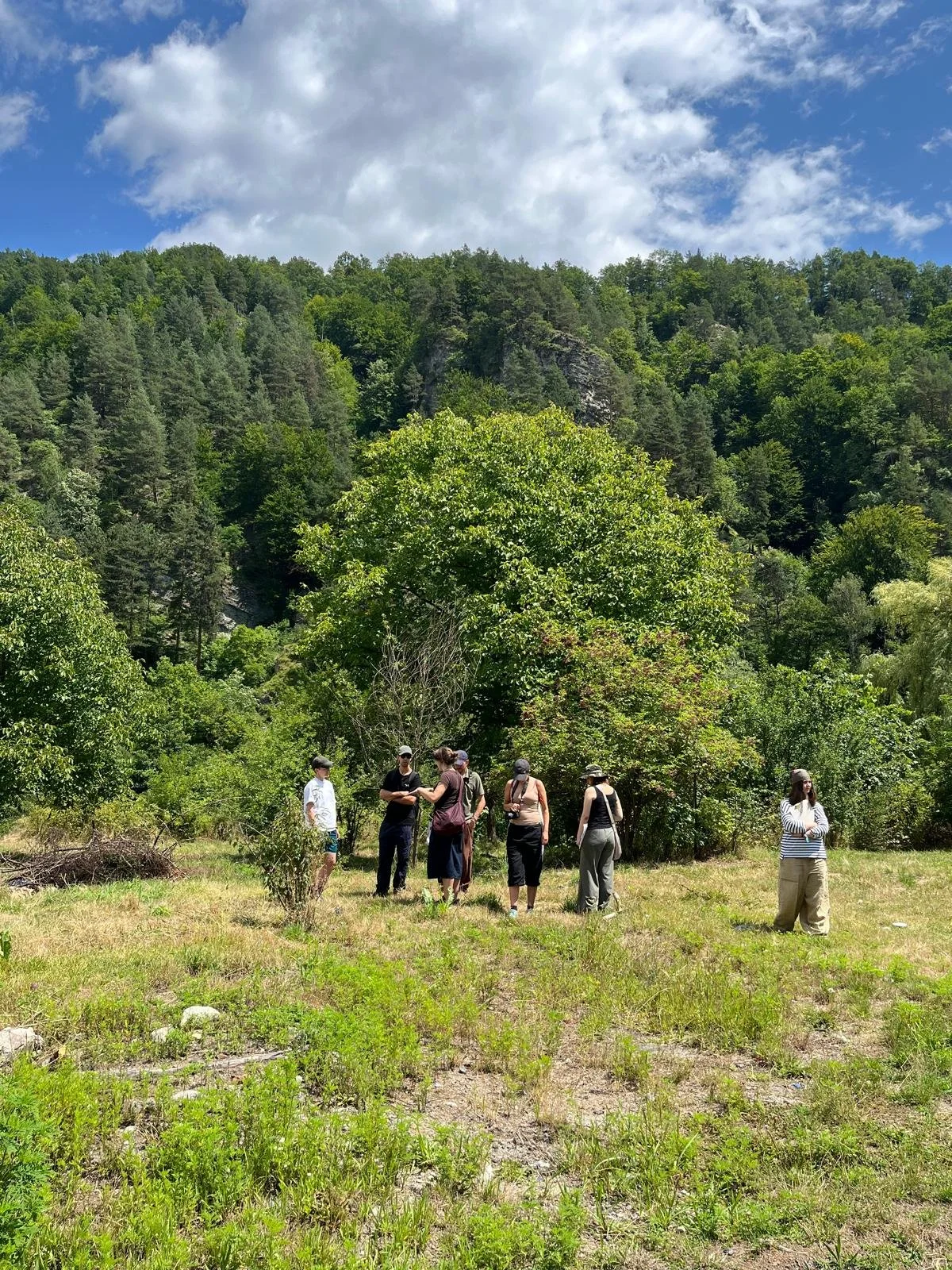
Brezoi is rich in forest and rural landscape amongst the hills. Photo Doina Petrescu.
In the heat of midsummer, we travelled to Brezoi in Romania for our fourth INNATURE fieldwork visit to establish a baseline for long-term microclimate and soil health monitoring.
Brezoi is surrounded by forests and known for its rich rural landscapes, providing a strong foundation for responding to the effects of climate change. While hotter summers and the drying up of wells and streams are becoming increasingly visible, these challenges also create opportunities to strengthen and diversify the landscape.The focus is therefore not simply on making an already green area greener, but on exploring how nature-based measures can further enhance its resilience, biodiversity and long-term vitality.
Together with Harun Niron, Doina Petrescu, Constantin Petros, Maria Alexandrescu and a group of students, we installed microclimate sensors and collected soil samples at two implementation sites: TERRRA, an educational and experimental site for ecological research and resilient practices, and the Lotru orchard.
At TERRRA, a range of restoration measures is being implemented. These include creating a rainwater pond, restoring a dry stream, rehabilitating the orchard and strengthening multilayered hedges that also produce food. Traditional hay mulching is also being reintroduced to retain moisture and enrich the soil, while a greywater infiltration garden will help improve local water management.
The Lotru orchard extends ideas developed at TERRRA into another part of Brezoi. Once an area of small sheds and scattered fruit trees, it is being transformed into a public space where the existing orchard will be restored and complemented by a productive multilayered hedge. Together, these interventions aim to support soil health, microclimate, biodiversity, and food production.
To understand how these interventions perform within the wider landscape, we are also monitoring several representative locations across Brezoi, including forest, meadow, a wet stream, riparian woodland, and a local park. Together, these sites provide a broader reference gradient against which future changes can be evaluated.
What I found particularly inspiring here is how the chosen restoration measures fit the existing culture of food production. Throughout Brezoi, there is a strong tradition of residents growing their own food, with orchards situated between taller buildings and vegetables cultivated in private gardens. Rehabilitating orchards and creating multilayered, food-producing hedges therefore builds on practices that are already familiar, while strengthening biodiversity, climate resilience and local food production.
We look forward to seeing how the soil, vegetation, and local microclimate develop as these measures take root!
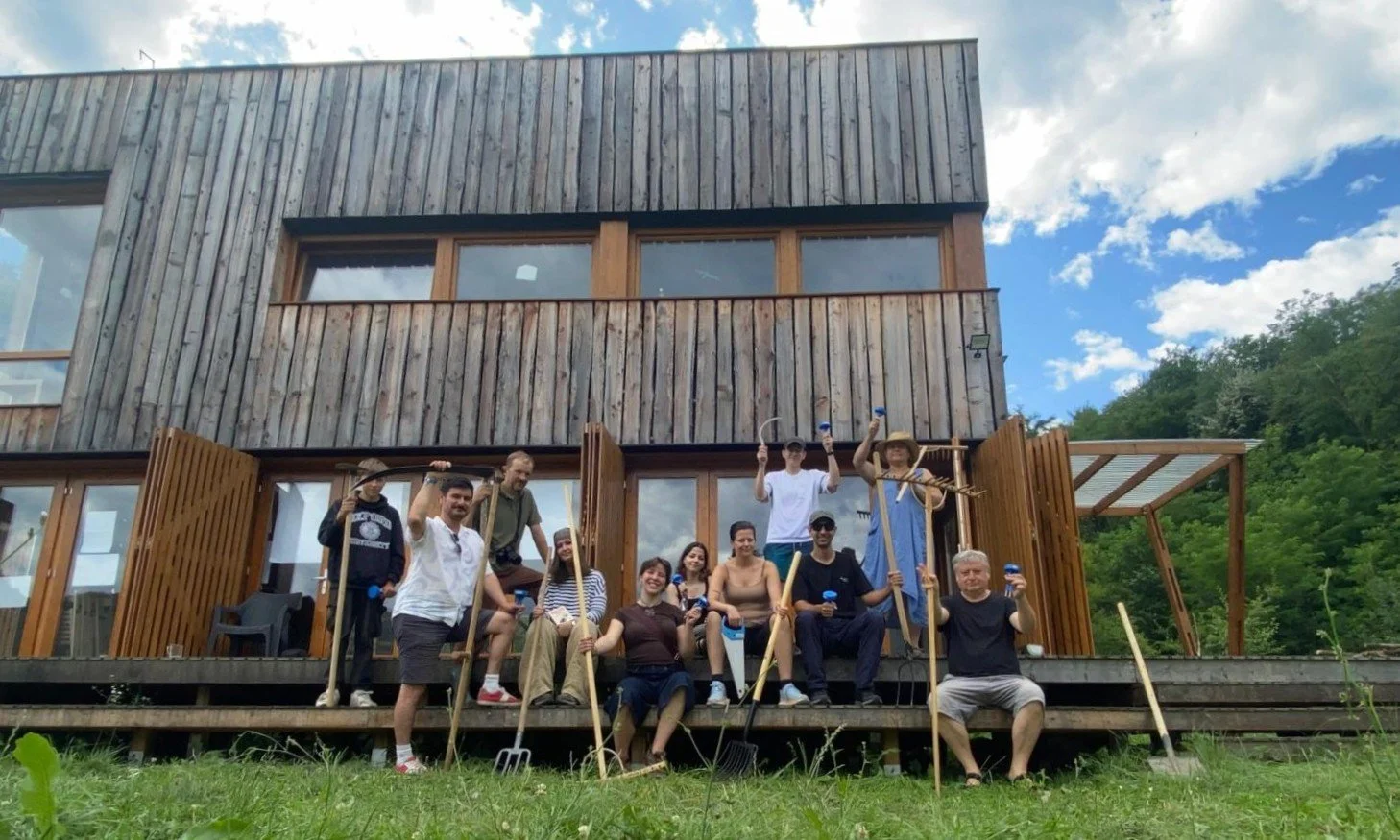
The team between work in Brezoi. Photo with self-timer.
Author: Olivia van der Weiden
Project coordinator citizen science
Ecology & Biodiversity
Utrecht University