
Microclimate sensors installed in Tampere
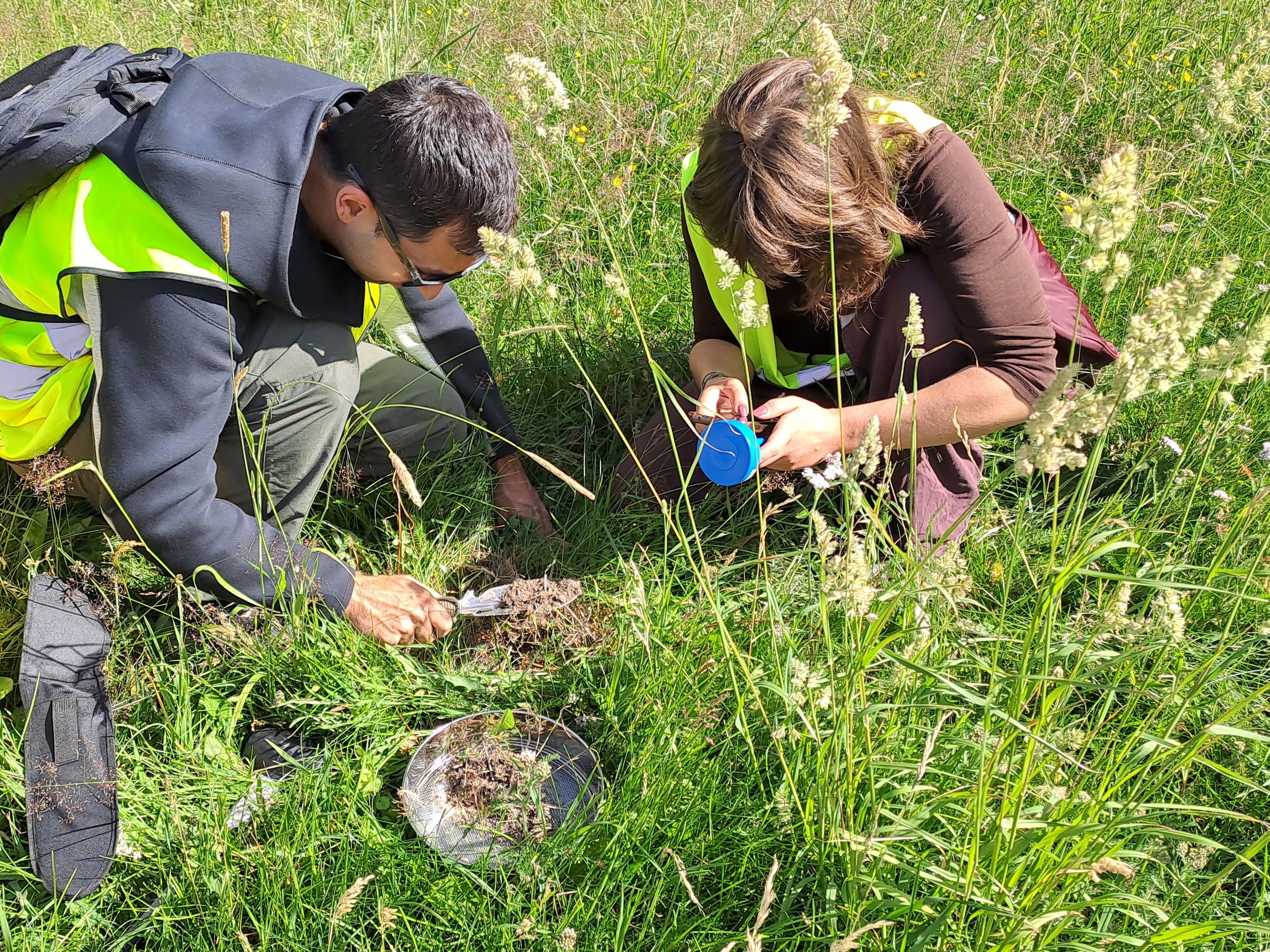
Installing microclimate sensors in Tampere revealed, how dry the soil is at the moment, as it has not rained a lot during the early summer. Photo: Elina Alatalo
Last week the second visit for setting up the baseline monitoring of microclimate and soil health took place – this time in Tampere, Finland!
Together with Harun Niron and our Finnish colleagues Sofie Pelsmakers, Katja Maununaho, Essi Kupari, Sanna Särkinen and Elina Alatalo, we visited, among others, the Nekala and Härmäläranta neighbourhoods, where measures are being implemented to support the endangered moth Anacampsis fuscella.
This moth depends on warm and dry environments where Zigzag Clover (Trifolium medium)is present. Its caterpillars feed on this clover and cleverly wrap themselves within the leaf, using the plant as both food and shelter while preparing for their transition into moths. By planting Zigzag Clover in suitable locations, the available habitat for this species can be expanded.
Through microclimate and soil health monitoring, we aim to better understand the local temperature, moisture and soil conditions associated with places where the clover and caterpillars are found. We are also monitoring locations where the clover will be planted in the future, allowing us to compare current conditions with how they may change once the plant becomes established.
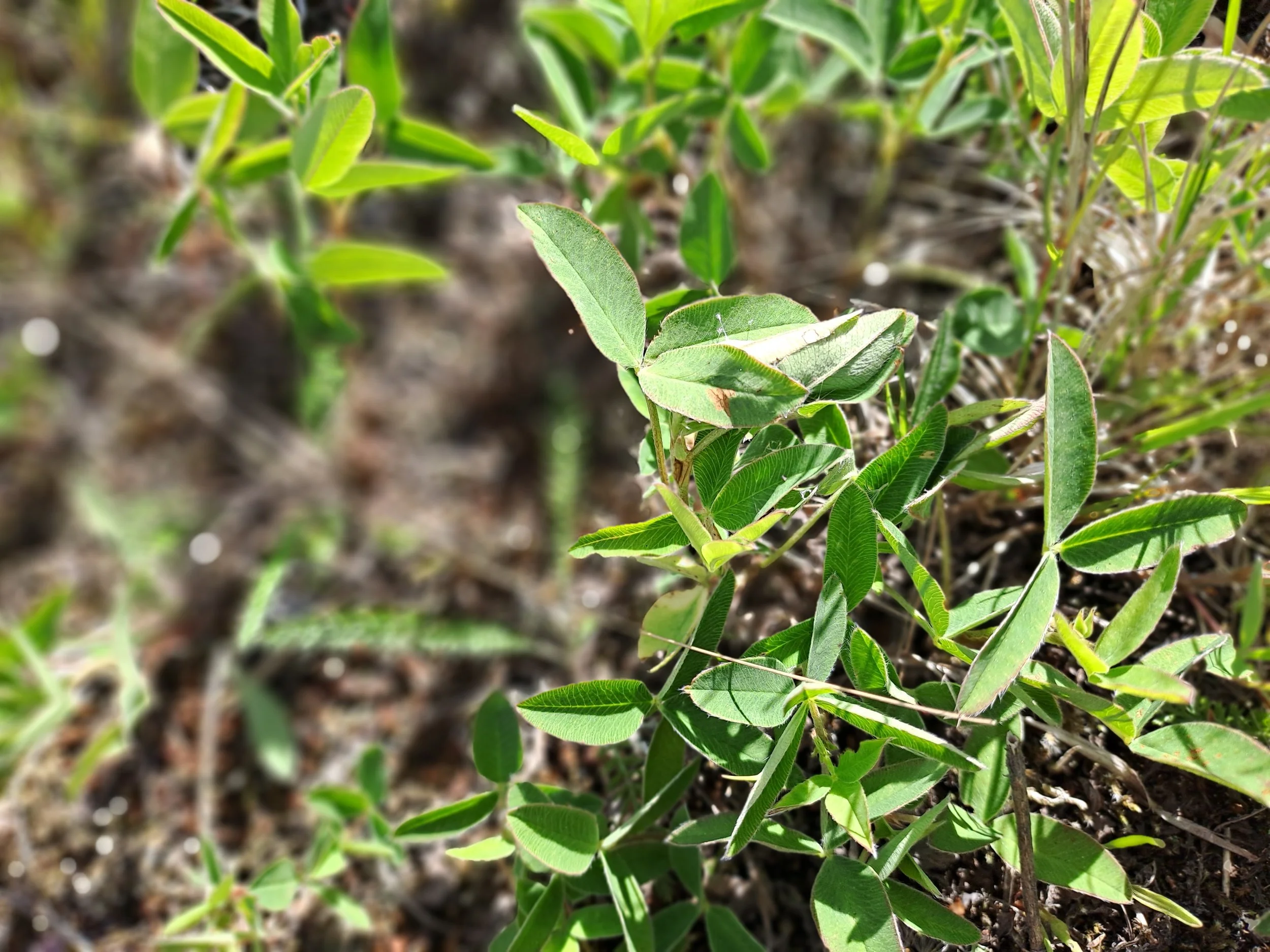
The moth is the most visible to human eyes as its caterpillars make a bundle out of the clover leaves to protect themselves. Photo: Elina Alatalo
Part of the fieldwork involved carefully searching, with hunched backs, for caterpillars hidden within the clover leaves. One remarkable finding was that an actual hotspot for this moth was located in a strip of land next to a gas station. It was a strong reminder that places we might easily overlook - or even dismiss as wasteland - can hold unexpected biodiversity value.
A special element of this demo case, which makes it different from the others, is that we are also measuring in 12 citizen gardens. What stood out was how many of these gardens contained multiple trees, diverse plant species, and a lively presence of bumblebees and other insects. These small urban green spaces may play an important role in creating connected habitats for biodiversity.
Fieldwork like this shows how biodiversity conservation can start in the most unexpected corners of the city - from roadside strips to private gardens.
Author: Olivia van der Weiden
Project coordinator citizen science
Ecology & Biodiversity
Utrecht University