
New mobile game to protect endangered moth
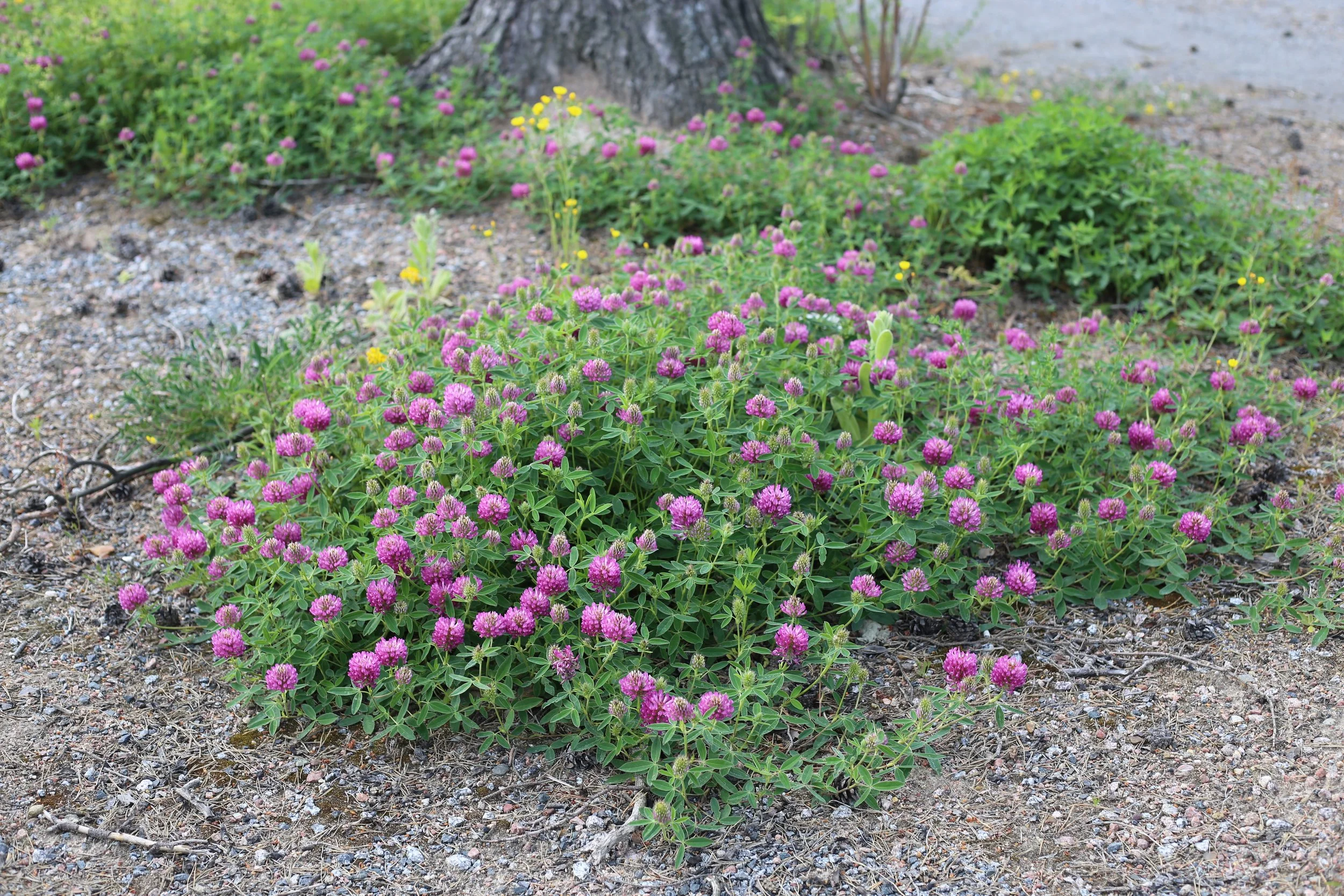
Zigzag clover, Trifolium medium, is a food plant for a critically endangered moth, Anacampsis fuscella. Zigzag clover leaves are pointed and do not have the wedge-shaped white patch, which distinguishes it from red clover. Photo: Essi Kupari, Wild Zone association
A new nature game will start in the Nekala area of Tampere in mid-June, with the aim of mapping the occurrence of zigzag clover. Zigzag clover is a food plant for the critically endangered moth species. Strengthening the occurrence of this clover also supports the moths chances of surviving in the area. The game is part of the INNATURE research project on nature-based solutions, coordinated by the University of Tampere, bringing together several European countries.
The moth is a butterfly species classified as critically endangered and under special protection in Finland. Its larva lives on forest clover and is most easily spotted in June–July, when the larva weaves together the leaves of its food plant.
In the nature game implemented through mobile application developed by Crowdsorsa, city residents can participate in promoting biodiversity by observing and documenting possible occurrences of forest clover. The game helps to distinguish zigzag clover from the familiar red clover. The information collected will help experts determine the current occurrence of zigzag clover in the Nekala area.
"This is the first time that the Crowdsorsa application has been used directly to support the protection of endangered species. We are very excited about this project," says Crowdsorsa CEO Toni Paju.
Forest clover thrives on roadsides and the edges of wooded areas. If you find forest clover, the best way to encourage its growth is to leave it to grow where it is.
Nature game supports local nature
The game is part of the INNATURE project, coordinated by the University of Tampere and funded by Horizon EU, which seeks solutions to support biodiversity together with residents in five different European cities. During the project, new meadow areas will be built in Tampere in Nekala and Härmälänranta. In Nekala, the goal is specifically to strengthen the habitat of the highly endangered moth.
– The moth has gained support from the previous meadows established around the Mustametsä kindergarden and Normal School, where forest clover also grows. It is great that we can continue this work in the INNATURE project together with the City of Tampere, the city's residents and the Wild Zone association, and continue to strive to strengthen the species' habitat, says Helena Leino, Professor of Environmental Policy.
Wild Zone is a nature conservation association founded in Tampere in 2013. The association's goal is to implement, test and develop new approaches to nature conservation, nature management and ecological restoration, such as collaboration with city residents.
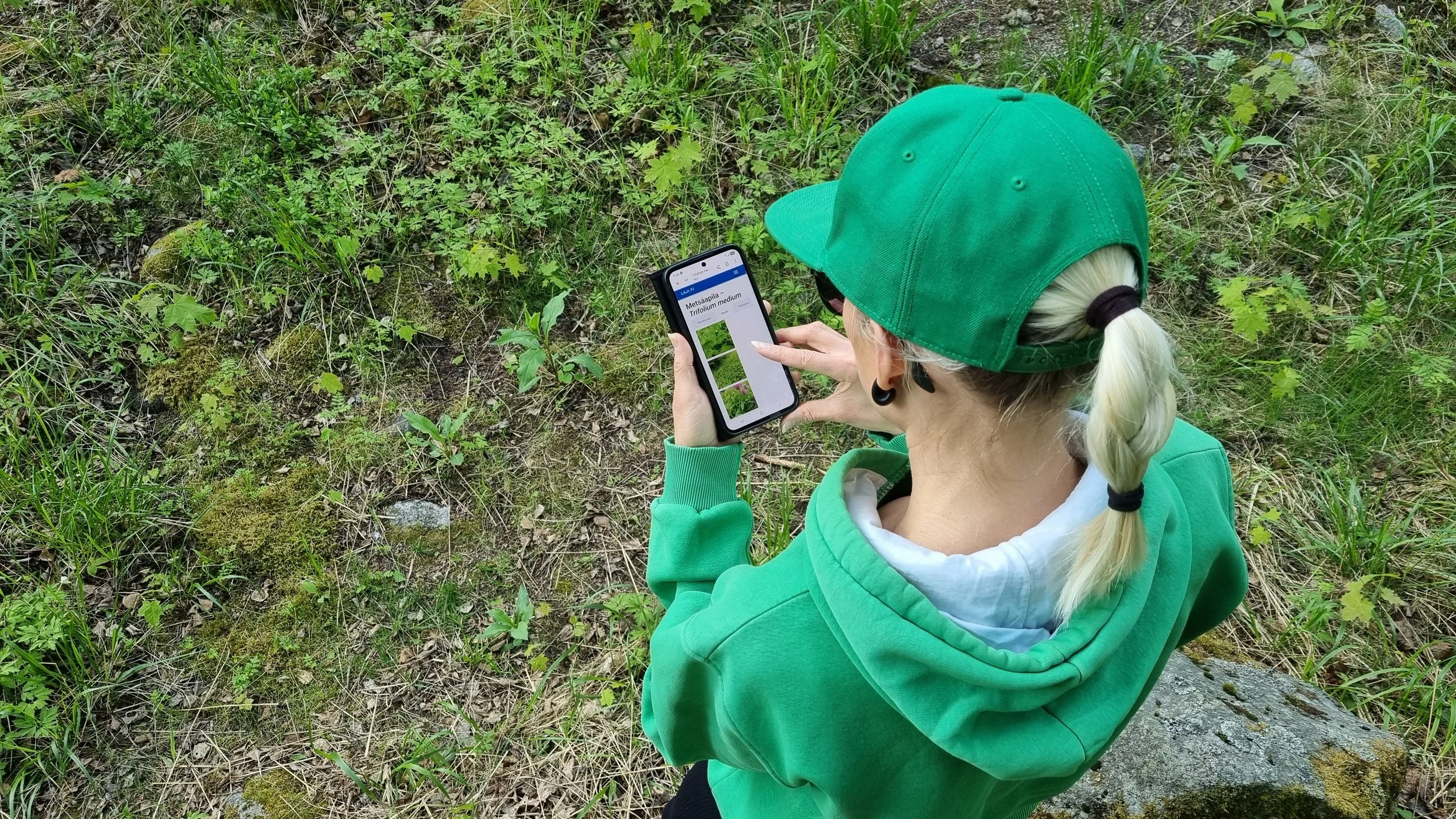
A mobile game launched June 15th helps identify the food plant of the moth. Photographer: Jenna Ramírez.
How to play the game
Download the Crowdsorsa app to your phone and create a username
Select the INNATURE game from the task list
First, read the game's instruction cards and complete a short test survey
Take a picture of the clover growth you observe in the game area using the app
The best way to support the clover is to let it grow in peace
Upload the pictures to the app for review within 72 hours
The game starts in Nekala on June 15th and runs until the end of August. The international INNATURE project is investigating how biodiversity, pleasant spaces for people and opportunities for residents to participate could be implemented simultaneously. The Tampere demos involve the City of Tampere, the University of Tampere, Villi Vyöhyke ry and the game developer Crowdsorsa.
What is Crowdsorsa?
Crowdsorsa is an internationally awarded startup company from Tampere, whose mobile game has already been used for environmental purposes in seven countries: Finland, Sweden, Estonia, Great Britain, Canada, the United States and Malaysia. The game is developed for the crowdsourced collection of image and video data. Participants receive rewards for playing and helping to improve the environment at the same time.
In addition to protecting endangered species, the game has also been successfully used to:
Combat alien species that threaten biodiversity
Map accessibility of cities and bus stops
Examine the condition of streets and cycle paths
Observe puddles on rainwater and roadways
Inventory manhole covers, road culverts and infrastructure
Report unsafe places in the city
Inspire everyday climate action (Emissions Game)
Clean up local nature (Trash Game)
Contacts:
Helena Leino, professori, ympäristöpolitiikka, Tampereen yliopisto
+358 40 190 9751
helena.leino@tuni.fi
Toni Paju, toimitusjohtaja, Crowdsorsa
+358 40 661 0072
toni.paju@crowdsorsa.com
Essi Kupari, puheenjohtaja, Villi vyöhyke ry
+358 44 902 7611
essi.kupari@villivyohyke.fi