Biodiversity monitoring and first Ecopark interventions in Brezoi
This summer, the Brezoi Living Lab moved into a new phase of hands-on exploration, bringing together ecological monitoring, local knowledge, and community participation. A wide range of activities took shape during July and August ranging from mapping biodiversity and traditional orchards to developing the future Ecoparc and transforming the TERRRA site. These efforts are laying the groundwork for a living lab rooted in Brezoi’s landscapes, heritage, and ecological future.
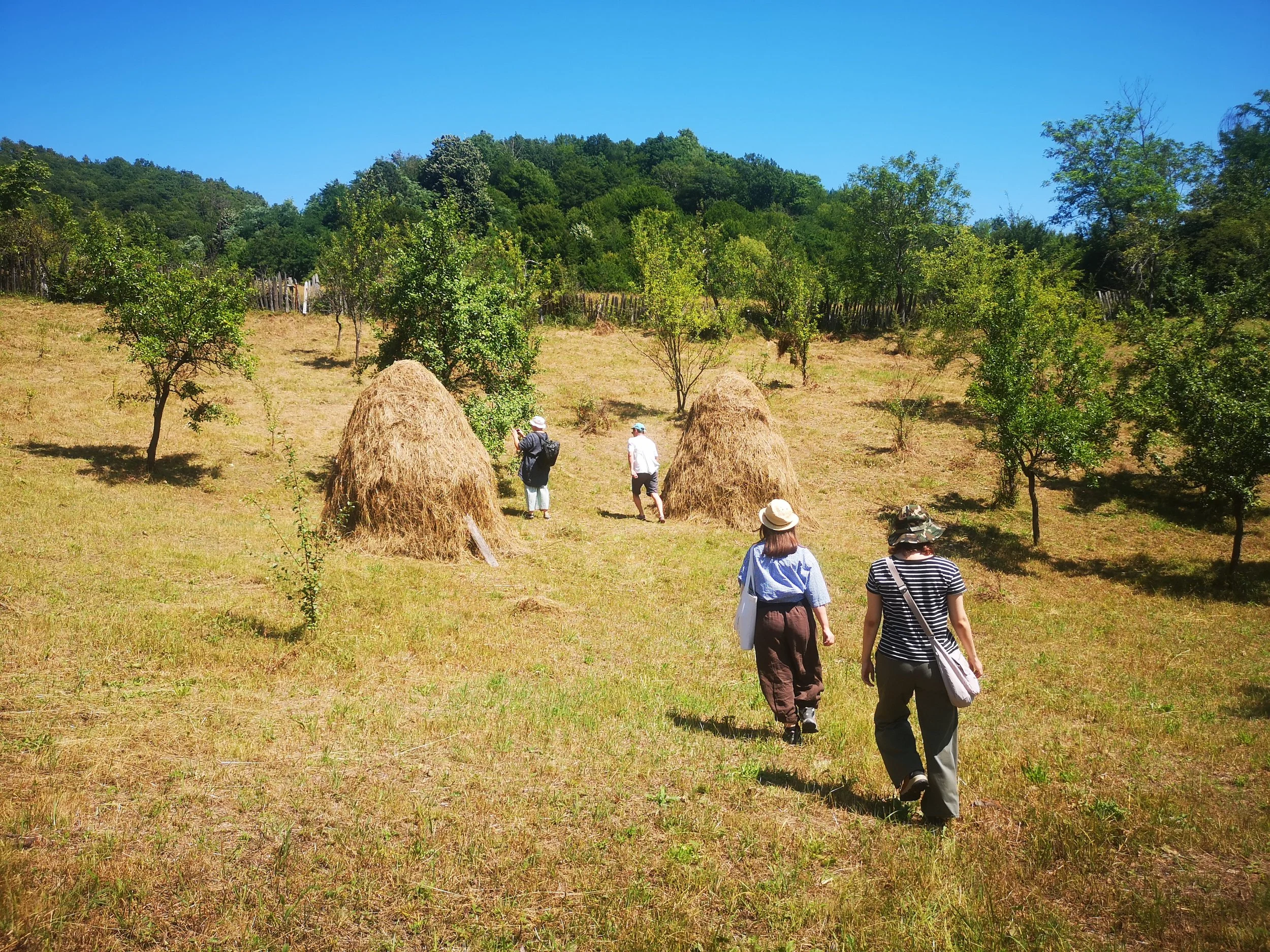
We visited an traditional orchard in Brezoi, with plum trees and hay mown after the first fireflies appear in July.
In July, Olivia van der Weiden and Harun Niron visited the site to install environmental monitoring sensors and collect baseline soil samples. You can read Olivia's account of the visit here.
In parallel, landscape designer, gardener, and ecologist Anthony Macharinow completed a residency focused on detailed mapping of the milieux at TERRRA. His work centered on establishing a framework for long-term biodiversity monitoring, specifically tracking herbaceous species and insect populations across the site's distinct habitats. Two USAMV landscape students, who first joined us in April, Rebeca Grad and Miruna Radulescu, returned for a summer internship to assist Anthony with the field mapping and ecological surveys.
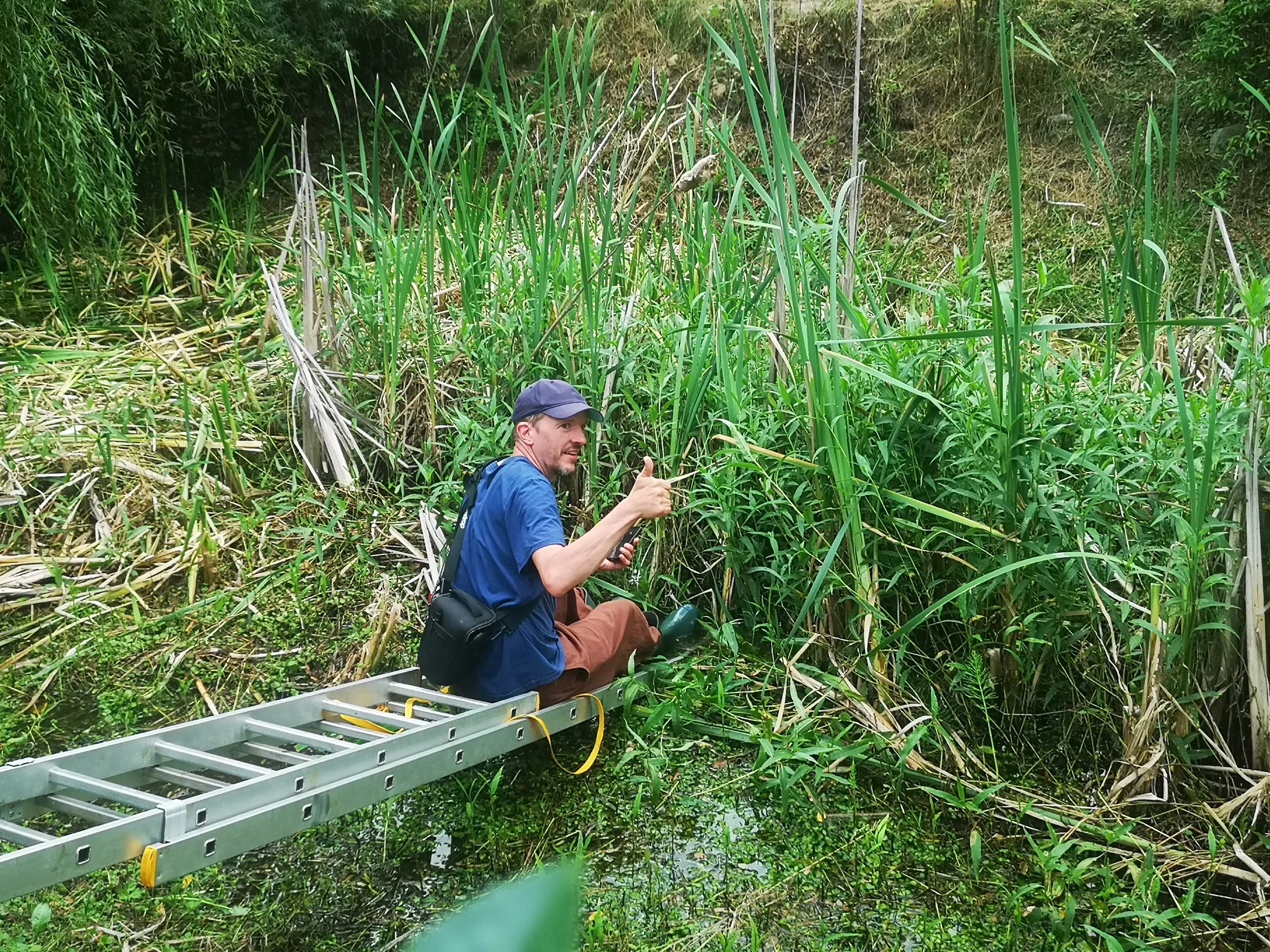
Anthony monitoring biodiversity in an existing pond to learn from nature-based solutions and inform the pond at TERRRA.
Students from Liceul Teoretic “Gheorghe Surdu” , along with Diana Predușel, their teacher returned to the site alongside the TERRRA team for a mini-bioblitz using the ObsIdentify app. Beyond identifying and logging as many species as possible, the activity grounded the children's observations in broader discussions about biodiversity, ecosystem functions, and how these varied habitats support our planned NBS prototypes.
The months of July and August brought a fresh round of stakeholder visits, as well as hands-on mapping of Brezoi’s traditional orchards, both along the slopes of Mount Doabra and tucked into local homestead gardens. In Brezoi, most homesteads feature a garden with a dedicated orchard section, where residents still maintain long-standing household traditions like making homemade fruit preserves. These field visits allowed us to start building an inventory of local fruit species, turning up traditional plum varieties like cloțușe, grașe, and brumării, older apple varieties including crețești, ionatan de soi vechi, de vară, and statkinson, as well as heirloom winter pears (de iarnă).
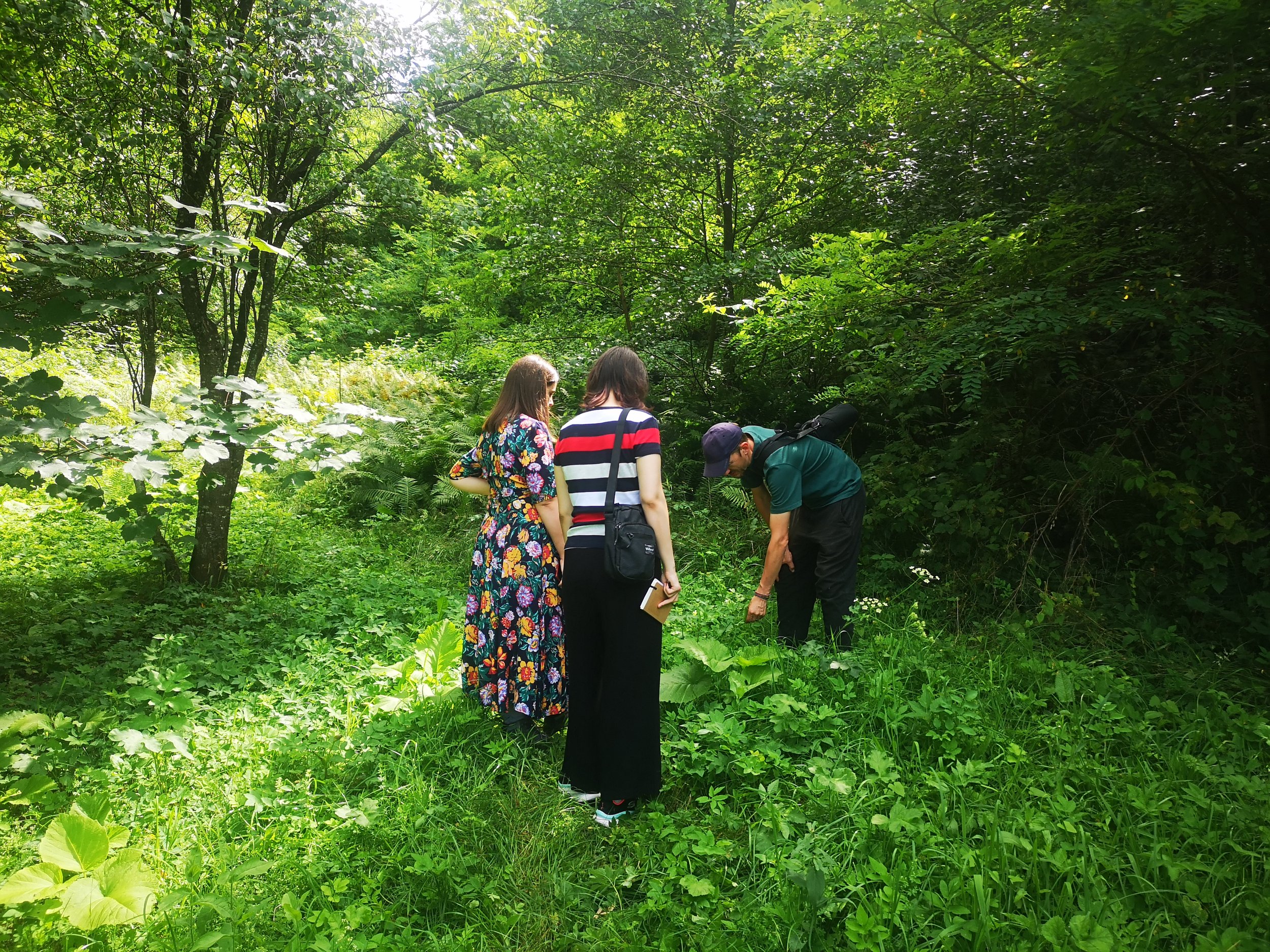
Anthony demonstrating herbaceous species monitoring at TERRRA to Rebeca and Miruna, USAMV students.
In early August, TERRRA hosted an artist residency organized by IASPIS (International Programme for Visual and Applied Arts). We welcomed architect Sara Davin Omar, who used her time on site to research, design, and build the very first infrastructure piece for the future Ecoparc. This first gesture in the park aimed to signal the transformations to come,and provide a practical amenity for those already using the park. The TERRRA team also installed signs on the site.
Located on a former site of self-build garages, the future Ecoparc site already is home to a semi-spontaneous orchard. With the City Hall's support, the Brezoi Living Lab plans to restore the existing orchard as a community orchard, bringing in traditional and ecological knowledge with NBS prototypes tested and developed at the TERRRA site.
August also saw the starting of the deconstruction and reconstruction of the TERRRA Annex, which is to be the physical living lab, hosting a community kitchen and small workshop. The Annex will replace and improve an existing deteriorated Annex on the TERRRA site. The design and construction of the annex will incorporate NBS for heating/cooling, as well as rainwater management, and aims to reuse as much as possible from the original material.
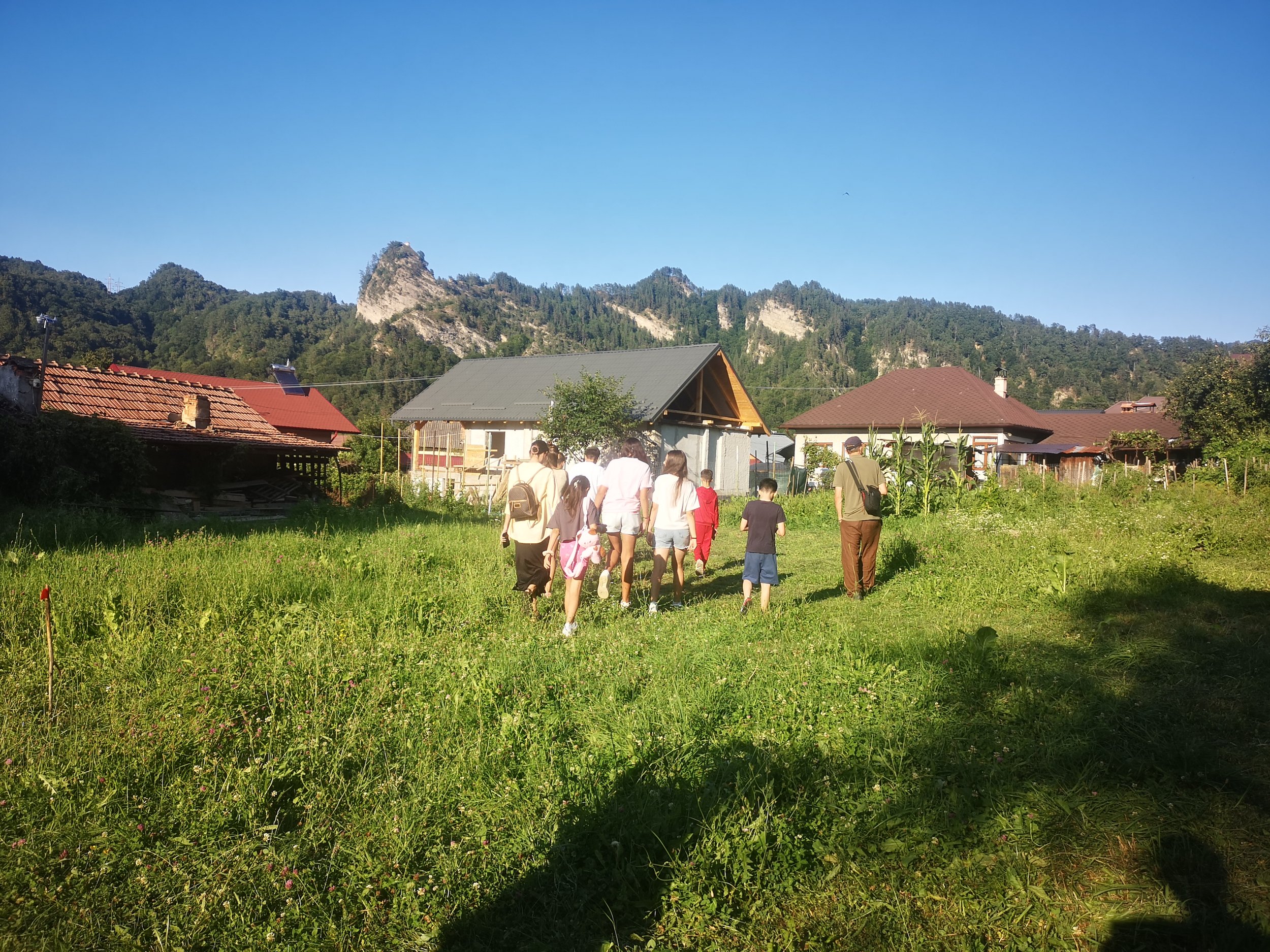
Students from Liceul Teoretic “Gheorghe Surdu” taking part in a mini-bioblitz of herbaceous and insect species at TERRRA.
Author of the text and pictures by Maria Alexandrescue, Atelier d’Architecture Autogérée.
Further inquiries: